Diversify to Navigate Complexity

A statement of position from The Protein Diversification Academy on building resilient, inclusive, and future-fit food systems.
Last edit
June 2026
Published by
The Protein Diversification Academy · Licensed under CC-BY

Citation: The Protein Diversification Academy. (2026, June). Diversify to Navigate Complexity – Position Paper. https://proteinacademy.org/.

Manger est un acte citoyen. Pourquoi? Parce qu'en choisissant de manger tel produit ou tel autre, de telle ou telle façon, nous avons le pouvoir et le choix de détruire notre santé et celle de la planète. L'acte de manger implique donc la responsabilité de tous et de chacun, à travers une grande chaîne qui va de la terre à l'assiette.

Eating is a civic act. Why? Because by choosing to eat one product or another, in one way or another, we have the power and the choice to destroy our health and that of the planet. The act of eating, therefore, entails the responsibility of everyone, individually and collectively, across the long chain from the earth to the plate.

Chef Alain Ducasse & Christian Regouby, Manger est un acte citoyen, Les Liens qui Libèrent, 2017

What this paper covers

  1. 01 The food system in the 21st century
  2. 02 The protein diversification approach
  3. 03 Identifying existing and emerging protein sources
  4. 04 Our position on protein diversification
  5. 05 Our commitment to protein diversification
  6. 06 Our theory of change
  7. 07 Signatories
  8. 08 References

01. The food system in the 21st century

Food shapes humanity and mirrors its challenges. Rapid changes in the societal fabric are exposing frictions in our food system,1,2 but also revealing opportunities. At the Protein Diversification Academy, we work to make food systems resilient, inclusive, and fit for future generations.

Animal-based foods remain central yet complex. They sustain livelihoods, underpin cultural traditions, and contribute to nutrition and food security.3 At the same time, they are linked to some of the most pressing issues of our time: environmental impact, ethical concerns, public health, and social inequalities.1

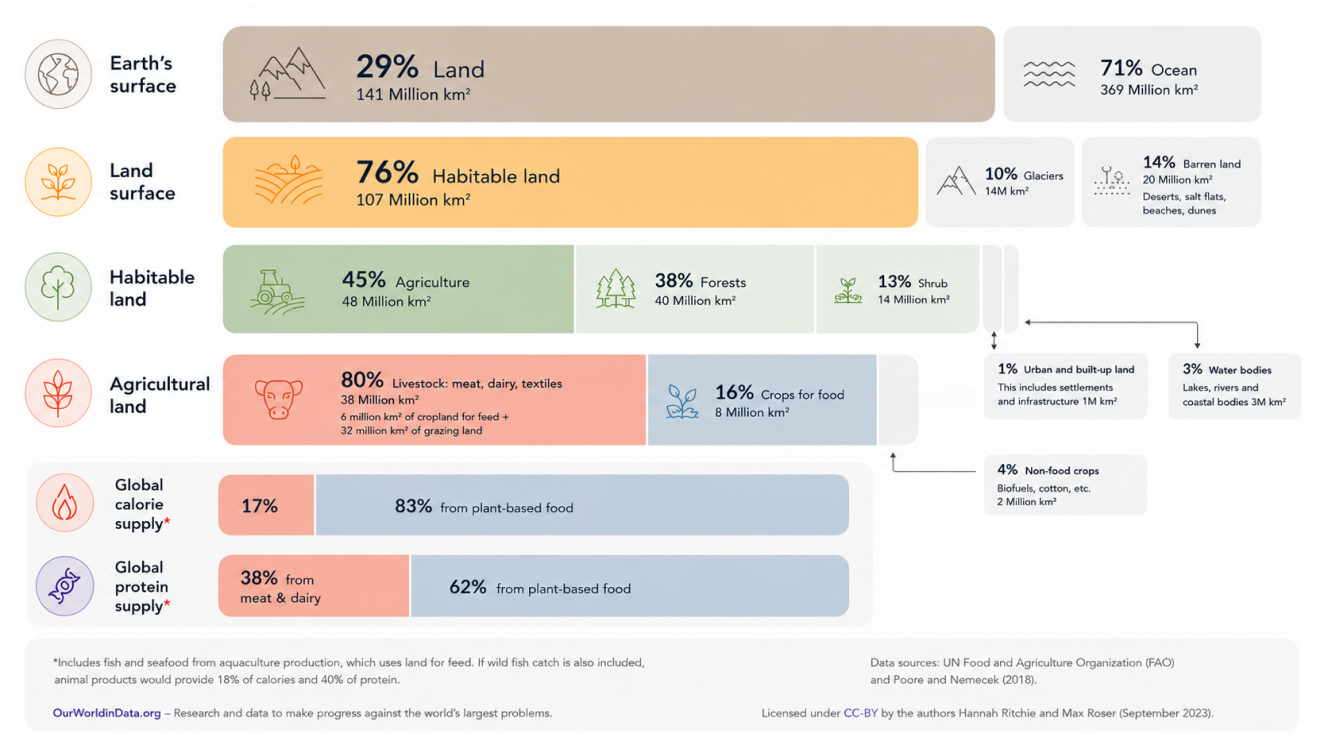
Currently, food environments remain structured around a narrow set of animal-based proteins.4 This historical concentration creates rigidity, weakens resilience to crises, and reinforces vulnerabilities.5 Production is inherently inefficient: animal-based foods use around 36% of global arable land, yet provide only 17% of total calories and 38% of global protein supply1 (Figure 1).

Figure 1. Global land use for food production.

Hannah Ritchie and Max Roser (September 2023). Our World in Data. https://ourworldindata.org/global-land-for-agriculture

Neither extreme solutions nor business-as-usual approaches are sufficient. Complete removal of animal-based foods ignores their multifaceted roles and fuels polarisation6, while maintaining current patterns exacerbates sustainability pressures.

The real challenge is therefore not whether animal-based foods should exist, but how to evolve the food system to deliver accessible, sustainable proteins, remain within planetary boundaries, and become resilient to the realities of the 21st century.2,7

02. The protein diversification approach

Diversification is a proven strategy for managing complexity and enhancing resilience. In energy systems, combining a mix of multiple sources ensures a continuous supply, stabilises costs, increases adaptability to fluctuating demand or crises, and contributes significantly to economic development.8,9 In global supply chains, companies that diversify suppliers and transport routes reduce vulnerability to disruptions, whether caused by natural disasters, geopolitical tensions, or pandemics. Diversification spreads risk, allowing the system to continue functioning even when individual components fail.10,11 In finance, diversified investment portfolios reduce exposure to any single asset or market, mitigating risk while optimising long-term returns.12,13

Despite this track record in other domains, diversification remains underutilised in the production, availability, and consumption of protein-rich foods. Today’s protein systems rely heavily on a few animal-based sources, creating structural rigidity and vulnerability to environmental, social, and economic pressures. Drawing lessons from these precedents, we believe that diversifying protein production and consumption can similarly increase resilience, reduce risk, and ultimately create more sustainable and resilient food systems.14

We consider protein diversification a systemic approach to expanding the range of viable protein sources within the food system.15,16 Rather than completely substituting existing sources or promoting any single alternative as a universal solution, it broadens the portfolio of options, creating complementary pathways that increase resilience, expand consumer choice, and gradually reduce dependence on animal-based foods, along with their associated externalities. Expanding the range of viable protein sources can help rebalance this structural concentration on animal-based proteins over time, reducing systemic dependence15,16, creating new viable businesses17,18,19, and ultimately increasing the system’s capacity to adapt to future challenges16.

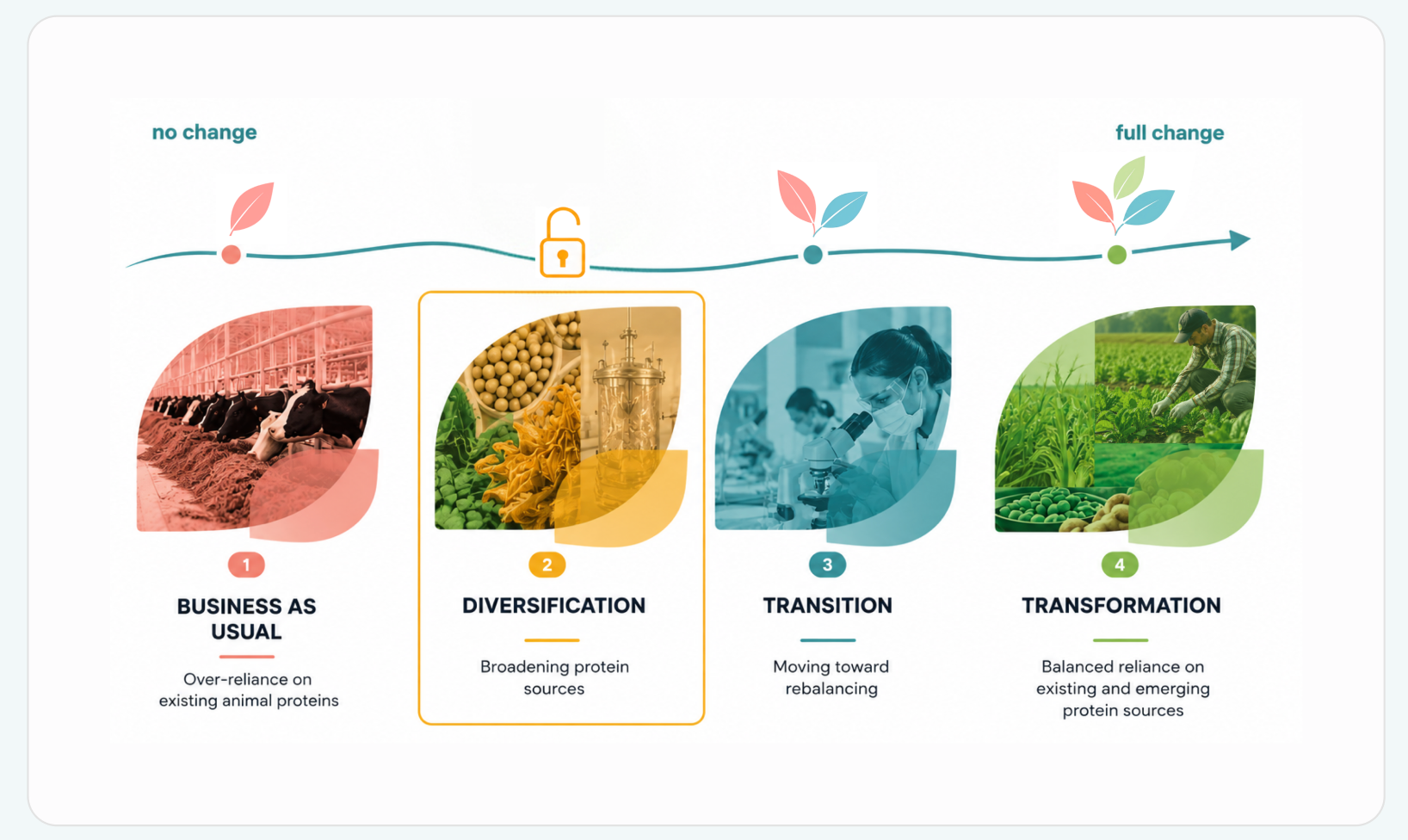
Consequently, protein diversification can be seen as an enabling strategy that sets the stage for the long-term transformation of the food system (Figure 2).


Figure 2. Diversification as an enabling strategy of transition and transformation toward a balanced reliance on existing and emerging protein sources.

Inspired by the Alliance Bioversity & CIAT presentation at Wageningen University & Research. 24 November 2025.

03. Identifying current and emerging protein sources

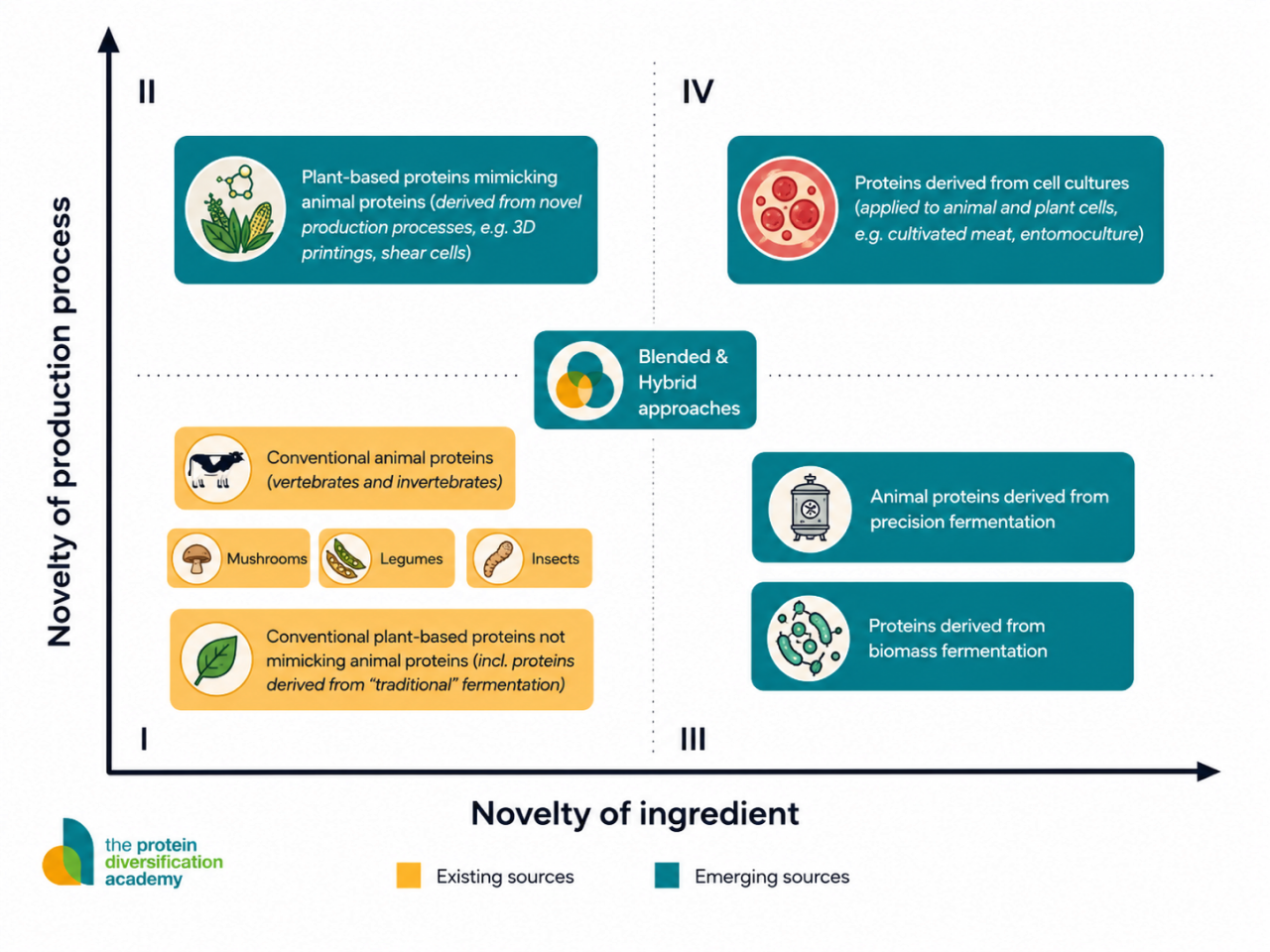
To advance protein diversification, it is first necessary to map the landscape of existing and emerging protein sources. Our framework positions protein sources along two dimensions: the novelty of the ingredient (from low to high) on the horizontal axis and the novelty of the production process (from low to high) on the vertical axis, resulting in four quadrants (Figure 3).

Figure 3. Existing and emerging protein source portfolio by novelty of ingredients and production processes.

Adapted from Prof. Grunert (MAPP Centre, AU). University of Turin Symposium — 16 October 2023.

I Existing sources

Quadrant I encompasses the most established protein sources characterised by low novelty in both ingredient type and production process, such as animal-derived proteins (from both vertebrate and invertebrate animals), alongside long-standing plant-based options and conventional plant-based proteins that do not explicitly aim to mimic animal products. Examples include whole foods such as legumes, seitan, tofu, and products of traditional fermentation such as tempeh. Consumers worldwide are broadly familiar with these sources, though accessibility varies across geographical and socio-economic contexts.

II Novel plant-based proteins

Quadrant II includes plant-based products that explicitly aim to mimic animal-based foods. While the ingredients themselves are not necessarily novel, the production processes often involve novel technologies such as extrusion, shear-cell processing and 3D printing. The central premise behind these products is that mimicking the sensory experience of animal-based foods can lower the barrier of entry for consumers accustomed to conventional animal products.20 These products offer measurable environmental and animal welfare benefits, and in many cases, improved resource efficiency compared with conventional animal production.1 However, this approach appeals to only certain consumer segments and should not be regarded as a universal solution.6,20

III Fermentation-derived proteins

Quadrant III encompasses protein sources derived from novel ingredients produced through established biotechnological processes. One such process, precision fermentation, uses microorganisms to produce specific biomolecules such as whey proteins or heme. On the other hand, biomass fermentation, also known as single-cell protein (SCP) production, uses whole microorganisms as a food ingredient. These approaches draw on a wide range of microbial biodiversity, including fungi, microalgae and bacteria, to produce protein-rich foods.1,21 Insects can be positioned between the first and third quadrants, as their degree of novelty varies significantly across regions.22

IV Cell culture-derived proteins

Quadrant IV includes protein sources where both the ingredients and production processes are novel. These include cultivated meat produced from animal cells, protein-rich plant tissues developed through cellular agriculture,23 and emerging concepts, such as entomoculture, the in-vitro production of insect tissue.24 These technologies hold considerable potential in terms of sustainability, resource efficiency, and reducing reliance on animal slaughter for food1. However, few products have reached the market to date, and robust evidence on their nutritional profiles and long-term impacts is still under analysis.25,26

At the intersections of the four quadrants lie blended and hybrid approaches. Blended products combine ingredients from the first quadrant, particularly non-animal sources, with those derived from other protein production pathways. Hybrid products, by contrast, contain no ingredients derived from conventional animal production and consist of combinations of two or more non-animal protein sources obtained through existing and/or emerging technologies.1

A first step toward diversification should involve rebalancing consumption within Quadrant 1, ensuring that animal-based proteins do not become overly predominant and that other options, such as plant-based ones (e.g. legumes), remain central. Notably, this rebalance-based approach aligns with dietary recommendations and policy frameworks, including the Planetary Health Diet27

However, the Protein Diversification Academy places primary focus on the protein sources in Quadrants II, III, and IV, as well as on blended and hybrid approaches. These quadrants not only offer the greatest potential to increase dietary diversity, reduce overreliance on a few animal proteins, and lower associated externalities1,19 but also involve greater complexity in understanding and development, requiring targeted education and training. By focusing on these areas, the Protein Diversification Academy can promote informed decision-making, foster innovation, and support the advancement of the sector.

04. Our position on protein diversification

The Protein Diversification Academy posits the following theses, statements, ideas and arguments as key drivers of our position on Protein Diversification. We recognise that:

  1. 1

    Protein Diversification lacks a universally accepted definition

    Our 2025 research28 found no consensus on its meaning. Building on our learnings, the Protein Diversification Academy defines it as:

    Broadening the range of protein sources available for human consumption in the food system, ensuring that all protein sources, existing and emerging, have equal opportunity to be developed and offered, and that consumers are empowered to make informed choices.

    This definition explicitly includes reducing systemic reliance on animal-based foods, while recognising their continuing roles in culture, nutrition, and livelihoods. Diversification should not be used interchangeably with “transition” or “transformation”, which refer to further steps enabled by the diversification approach.

  2. 2

    Protein is a simplification of food complexity

    Framing the discussion around protein is, by necessity, a reductionist choice: food is more than the sum of its nutrients, and animal-based foods extend beyond meat and Western-centric formats.29,30 Nevertheless, this focus provides a practical lens for guiding strategies that increase dietary diversity and reduce overreliance on a few protein sources, allowing the Protein Diversification Academy to target interventions effectively while acknowledging the broader complexity of diets.

  3. 3

    The term “Alternative Proteins” carries assumptions that sit uneasily within a diversification approach

    The term has helped draw attention to emerging food technologies, but it implies substitution of conventional sources and often relies on mimicry and referential identity to animal products. While this approach may appeal to certain consumers, it can reinforce ingroup/outgroup perceptions and narrow the scope for conversation.6,29,30

    The Protein Diversification Academy supports the development of emerging protein sources, such as those from cellular agriculture and plant-based technologies, including approaches that extend beyond simply mimicking the sensory attributes of animal proteins6, but frames them as additions to a broader portfolio, not as replacements. Our focus is on equal opportunity for development and market access, alongside empowering consumers with accessible, accurate information.

  4. 4

    Protein Diversification is not free from trade-offs

    Focusing on broadening the range of protein sources does not directly address systemic issues such as overconsumption and overproduction, particularly in high-income societies.31 We acknowledge this limitation and consider protein diversification to be a pragmatic approach within a broader portfolio of solutions, not a comprehensive answer to every dysfunction of the food system.

  5. 5

    Consumer behaviour is complex and diverse

    Food choices are shaped by cultural context, psychological drivers, economic constraints, and individual preferences.32 There is no one-size-fits-all solution. Protein diversification builds on this recognition: it does not prescribe what people should eat, but seeks to ensure that a diverse range of protein sources, existing and emerging, is available, accessible, and culturally relevant. By connecting consumers with these diverse sources, the food system can be decentralised, reducing structural dependence on animal-based proteins and supporting more resilient and adaptable supply chains.

  6. 6

    Education is a critical focus area to advance protein diversification

    Informed consumers can make better choices, and skilled professionals can drive the development of both existing and emerging protein sources.33 Yet the knowledge and training needed to support protein diversification remain largely absent from current educational frameworks.

  7. 7

    Global access to protein diversification education is limited and unequal

    Access to education and training in protein diversification remains scarce, particularly in regions with the largest projected demographic growth. These regions are often treated as end-users of solutions developed elsewhere, rather than as active participants in shaping them. While the Protein Diversification Academy focuses primarily on protein sources in Quadrants II, III, and IV, where innovation and diversification potential are highest, we also recognise the need to incorporate perspectives, locally relevant protein sources, and culturally meaningful practices from around the world. By doing so, we seek to provide inclusive education that not only increases awareness of emerging protein sources but also empowers communities to adapt solutions to their own cultural and dietary contexts.

05. Our commitment to protein diversification

For these reasons, the Protein Diversification Academy commits to:

I

Bridging the Education Gap in Protein Diversification

We provide accessible courses and training that equip individuals with the knowledge and skills to engage with and advance protein diversification. Education plays a critical role in shaping careers and enabling contributions across research, entrepreneurship, policy, and industry.33,34 By strengthening this talent pipeline, we support a food system in which the conditions for diversification can take root.34

II

Fostering Constructive Dialogue

Diverse points of view are critical for evolving the protein diversification strategy. We do not seek to impose our approach on those who foster and/or choose an alternative approach and will stay committed to enabling a constructive dialogue where everyone is empowered to bring their voice to the table.

III

Evolving with Evidence

We are open to refining and deepening our perspectives as new scientific evidence and insights emerge. Our position is dynamic, evolving in response to innovation, research, and constructive debate.

This paper is a starting point, not a final word.

06. Our theory of change

Input

The Protein Diversification Learning Pathway — three education programmes aligned with the EIT Food Competency Framework.

Intermediate outputs
1

More individuals informed about the food system challenges, the role of animal-based proteins and the need to diversify.

2

Increased knowledge about emerging protein sources and technologies needed to advance protein diversification.

3

Graduates are motivated to dedicate a whole or part of their careers to advancing protein diversification.

4

Expanded social and professional opportunities to enter careers in protein diversification.

5

Strengthened talent pipeline for protein diversification initiatives, facilitating recruitment, collaboration, and business creation.

6

Higher understanding of how and where their skill-set fits in the protein diversification sector.35,36

Outcome

PDLP graduates are pursuing an effective career pathway to advance protein diversification in the medium term (5 years +).1*

Impact

A future-proof food system, resilient to crises, and able to provide accessible, sustainable proteins to the next generations.

1* While we recognise the importance of specifying quantitative targets for the Theory of Change, our Association is not currently in a position to do so. Accordingly, percentages and figures are omitted at this stage and will be established after the first programme iterations, informed by alumni feedback.

07. Signatories

This position is endorsed by the Protein Diversification Academy members listed below. About us

KB Kartic Bajpai
PR Pericle Raverta
TR Tin Rudnicki
AP Arianna Pirela
AG Ananya Gupta
AH Adrian Hirt
MK Mia Keyser
RA Ravi Audichya
IB Ianna Baum
KK Kees Kranendonk
GD Georgia Desideri-Zigante
PS Pawan Shakya
JE Joy Eyesan
AP Alexandra Palomeque

08. References

  1. 1

    United Nations Environment Programme. (2023). What’s cooking? An assessment of the potential impacts of selected novel alternatives to conventional animal products. Frontiers. https://doi.org/10.59117/20.500.11822/44236

  2. 2

    te Wierik, S., DeClerck, F., Beusen, A. et al. Identifying the safe operating space for food systems. Nature Food 6, 1153–1163 (2025). https://doi.org/10.1038/s43016-025-01252-6

  3. 3

    Nordhagen, S. (2025). Animal-source foods for nutrition, environment and society: Finding a balance. Proceedings of the Nutrition Society, 1–11. https://doi.org/10.1017/S0029665125000096

  4. 4

    Miller, V., Reedy, J., Cudhea, F., et al. Global Dietary Database (2022). Global, regional, and national consumption of animal-source foods between 1990 and 2018: findings from the Global Dietary Database. The Lancet. Planetary health, 6(3), e243–e256. https://doi.org/10.1016/S2542-5196(21)00352-1

  5. 5

    Richards, C., Messner, R. & Ransom, E. Food system shocks and food insecurity vulnerabilities: introduction to the symposium. Agriculture and Human Values 42, 9–16 (2025). https://doi.org/10.1007/s10460-024-10684-y

  6. 6

    Siegrist, M., & Hartmann, C. (2023). Why alternative proteins will not disrupt the meat industry. Meat Science, 203, 109223. https://doi.org/10.1016/j.meatsci.2023.109223

  7. 7

    High Level Panel of Experts on Food Security and Nutrition. (2025). Building resilient food systems. FAO. https://sfcs.fao.org/media-cnt/docs/devhlpelibraries/report-20/hlpe20_resilience_report.pdf

  8. 8

    Hoang, D. P., Chu, L. K., To, T. T., & Le, H. T. (2024). How diversification in energy and economic sectors influences environmental quality: International evidence. Energy Policy, 195, 114347. https://doi.org/10.1016/j.enpol.2024.114347

  9. 9

    Solarin, S. A., Opoku, E. E. O., & Bello, M. O. (2025). Energy diversification and its determinants: Evidence from developed and developing countries. Journal of Knowledge Economy, 16, 18501–18526. https://doi.org/10.1007/s13132-025-02638-4

  10. 10

    Song, F., Wu, M., & Liu, R. (2025). The impact of supply chain structure diversification on high-quality development: A moderating perspective of digital supply chains. Journal of Theoretical and Applied Electronic Commerce Research, 20(4), 301. https://doi.org/10.3390/jtaer20040301

  11. 11

    Lin, Y., Fan, D., Shi, X., & Fu, M. (2021). The effects of supply chain diversification during the COVID-19 crisis: Evidence from Chinese manufacturers. Transportation Research Part E: Logistics and Transportation Review, 155, 102493. https://doi.org/10.1016/j.tre.2021.102493

  12. 12

    Nguyen, T. B. C., & Nguyen, Q. N. (2024). Strategic resilience: Exploring diversification’s impact on R&D investment during economic crises. Heliyon, 10(23), e40582. https://doi.org/10.1016/j.heliyon.2024.e40582

  13. 13

    Manganelli, S., & Popov, A. (2010). Finance and diversification (ECB Working Paper No. 1259). European Central Bank. https://www.ecb.europa.eu/pub/pdf/scpwps/ecbwp1259.pdf

  14. 14

    Figaredo, C., & Chatsuwan, M. (2024, March 6). Protein diversification: A tool to address climate, nature, and public health risks. FAIRR Initiative. https://www.fairr.org/news-events/insights/protein-diversification-a-tool-to-address-climate-nature-and-public-health

  15. 15
  16. 16

    Nipius, L., & Schröder, T. (2026, February). There’s enough space on the plate: Putting forward the case for protein diversification in the EU. CEPS – Centre for European Policy Studies. https://cdn.ceps.eu/2026/03/2026-02-ERCC-Explainer-on-proteins.pdf

  17. 17

    Augère-Granier, M.-L. (2016). Farm diversification in the EU (EPRS Briefing No. 581978). European Parliamentary Research Service. https://www.europarl.europa.eu/RegData/etudes/BRIE/2016/581978/EPRS_BRI(2016)581978_EN.pdf

  18. 18

    RESPECTfarms & FEASTS. (2025). Business models in European agri- and aquaculture and engagement strategies for farmers and aquafarmers (Report).

  19. 19

    Systemiq (2026). Seizing the economic opportunity of alternative proteins in Europe: Delivering prosperity from farm to factory. https://www.systemiq.earth/wp-content/uploads/2026/02/Seizing-the-economic-opportunity-of-alternative-proteins-in-Europe_ExSummary-country-deep-dives.pdf

  20. 20

    Granato, G., & Wassmann, B. (2024). To imitate or not to imitate? How consumers perceive animal origin products and plant-based alternatives imitating minimally processed vs ultra-processed food. Journal of Cleaner Production, 472, Article 143447. https://doi.org/10.1016/j.jclepro.2024.143447

  21. 21

    Sharif, M., Zafar, M. H., Aqib, A. I., Saeed, M., Farag, M. R., & Alagawany, M. (2021). Single cell protein: Sources, mechanism of production, nutritional value and its uses in aquaculture nutrition. Aquaculture, 531, 735885. https://doi.org/10.1016/j.aquaculture.2020.735885

  22. 22

    Omuse, E.R., Tonnang, H.E.Z., Yusuf, A.A. et al. The global atlas of edible insects: analysis of diversity and commonality contributing to food systems and sustainability. Scientific Reports 14, 5045 (2024). https://doi.org/10.1038/s41598-024-55603-7

  23. 23

    Gubser, G., Vollenweider, S., Eibl, D., & Eibl, R. (2021). Food ingredients and food made with plant cell and tissue cultures: State-of-the-art and future trends. Engineering in Life Sciences, 21(3–4), 87–98. https://doi.org/10.1002/elsc.202000077

  24. 24

    Ashizawa, R., Rubio, N., Letcher, S., Parkinson, A., Dmitruczyk, V., & Kaplan, D. L. (2022). Entomoculture: A preliminary techno-economic assessment. Foods, 11(19), 3037. https://doi.org/10.3390/foods11193037

  25. 25

    Kardas, M., Staśkiewicz-Bartecka, W., & Kołodziejczyk, A. (2025). Cultured meat reformulation: Health potential and sustainable food challenges—Narrative review. Comprehensive Reviews in Food Science and Food Safety, 24(6), e70262. https://doi.org/10.1111/1541-4337.70262

  26. 26

    Voccia, D., Trevisan, M., Rencricca, G., Peña Caviativa, L., Froldi, F., & Lamastra, L. (2026). Greenhouse gas implications of introducing cultured meat into German and Italian diets: A comparison of substitution and optimized dietary scenarios. Resources, Environment and Sustainability, 24, 100317. https://doi.org/10.1016/j.resenv.2026.100317

  27. 27

    The Planetary Health Diet. EAT Forum. https://eatforum.org/eat-lancet/the-planetary-health-diet/

  28. 28

    The Protein Diversification Academy. (2026, February 15). Defining protein diversification.

  29. 29

    Duluins, O., & Baret, P. V. (2024). A systematic review of the definitions, narratives and paths forwards for a protein transition in high-income countries. Nature food, 5(1), 28–36. https://doi.org/10.1038/s43016-023-00906-7

  30. 30

    Duluins, O., Cardinaals, R., Potter Karlsson, H., Nájera Espinosa, S., Resare Sahlin, K., Candel, J. J. L., Hornborg, S., Matthews, A., & Baret, P. V. (2025). A restatement of the protein transition. Environmental Research Letters, 20(8), 084042. https://doi.org/10.1088/1748-9326/ade86f

  31. 31

    Duluins, O., & Baret, P. V. (2024). The paradoxes of the protein transition maintain existing animal production and consumption systems. Nature food, 5(9), 725–730. https://doi.org/10.1038/s43016-024-01036-4

  32. 32

    Siegrist, M., & Hartmann, C. (2020). Consumer acceptance of novel food technologies. Nature food, 1(6), 343–350. https://doi.org/10.1038/s43016-020-0094-x

  33. 33

    Pink, A. E., Wan, K. S., Juraimi, S. A., Bhatnagar, M., Chee, J., Oh, H. S., Simons, J., Teo, P. S., Sheen, F., Chong, M. F.-F., Smith, B. P. C., & Fogel, A. (2026). Using interactive education materials to empower children to be future consumers of alternative proteins: A randomised active-controlled trial. Appetite, 222, Article 108500. https://doi.org/10.1016/j.appet.2026.108500

  34. 34

    Lazaro-Mojica, J., & Fernandez, R. (2020). Review paper on the future of the food sector through education, capacity building, knowledge translation and open innovation. Current Opinion in Food Science, 38, 162–167. https://doi.org/10.1016/j.cofs.2020.11.009

  35. 35

    Alexander, A. (2023, July 16). Nailing the basics – Theories of change [Forum post]. EAForum. https://forum.effectivealtruism.org/posts/9t7St3pfEEiDsQ2Tr/nailing-the-basics-theories-of-change

  36. 36

    Michie, S., van Stralen, M. M., & West, R. (2011). The behaviour change wheel: a new method for characterising and designing behaviour change interventions. Implementation science : IS, 6, 42. https://doi.org/10.1186/1748-5908-6-42